Tuesday, October 12, 2021

Digital Media


Marshall McLuhan

I found a greater understanding of digital media and digital literacy through these three videos. The first video, ‘Digital Media are Networked’, examines a negative side to digital media, that it is interconnected and interactive. While at first glance, this could bring people together, it has many ill side effects. The most harmful of which being that “anyone can post anything online, and make it look authentic”. Anyone being able to wield such authority speaks to the potential danger of digital media. Anonymity may also have an adverse effect in situations like this. When someone exploits their anonymity online, it is virtually impossible to ensure they face accountability or repercussions of some kind.

The second video explored the use of digital literacy in the everyday lives of most people. This has made me consider the various aspects of digital literacy and how they come into ordinary use. In recent years, digital media has come into use in many workplaces and as a result is developing a greater presence in education. As internet infrastructure developed, the number of tasks possible digitally has increased. For example, workplace communication and assignments are generally handled with virtual environments, in addition to a worldwide reliance on Zoom in recent memory. Despite the length of this video, it had me considering the vast presence of digital media in society, and how it’s going to evolve in the years to come.

The third video, a TEDx talk held by Doug Belshaw establishes the idea of regular literacy before homing in on digital literacy. An anecdote of a child’s ‘pre-literacy behaviour’ gives an idea of how basic literacy comes about in children and how that can correspond to digital literacy. I found it interesting how the connection is made between instinctual learning methods and his proposed ‘progressive’ teaching of digital literacy. This human behaviour is extended into menu systems such as an iPad interface. This style of interface differs from most that rely on branching logic. By simplifying menus into a home screen of icons, Apple has created “elegant consumption”.

He goes on to mention the effect of memes on digital literacy, more specifically the ‘remixing’ aspect of the internet. I see now that the speed at which communication happens on the internet has impacted the face of digital media over the past few decades. While memes are primarily comedic, they can have a real impact on the world around us. A suitable example of this is shown in the ‘Pepper Spray Cop’, John Pike, who ended up suspended from the police force because of his actions being publicised by the internet.


Sources:

MediaSmarts (2018) Digital Literacy 101 [online] Available from <https://youtu.be/b-HXiObDDnA> [accessed 10 Nov 2021]. 

University of Derby (2014) Digital Literacy and why it matters [online] Available from <https://youtu.be/p2k3C-iB88w> [accessed 10 Nov 2021].

TEDxWarwick (2012) The essential elements of digital literacies [online] Available from <https://youtu.be/A8yQPoTcZ78> [accessed 10 Nov 2021].


Tuesday, October 5, 2021

Active Reading

 This paper, examining the role of student-constructed questions in encouraging active reading has given me a new perspective on how to digest information in an effective, captivating manner. Ernest Balajthy posits that self-questioning has “demonstrated its classroom usefulness and its place in models of learning by reading”. Upon first seeing this text, I had scanned over the general layout, as suggested by the first text assigned. The headings and title had given me the impression that the author had intended to examine the effectiveness of critical thinking as a means of absorbing information. In the opening few paragraphs, the author acknowledges the views that “retention is automatic with comprehension” and that “retention is influenced by interacting factors”. Presumably, the addition of these perspectives shows that public opinion is not unanimous on the matter and offers a consensus to be juxtaposed later in the paper. I felt it was important that Balajthy mentioned the early studies on self-questioning. Without its inclusion, the piece may lack a sense of credibility.

Using the notetaking tips from the video task this week, I was able to break the paper down into simple to grasp concepts, as opposed to rote memorisation or parsing the text repeatedly. I do believe that keeping my mind active while intaking information is more effective than more traditional techniques, and I will keep this in mind in the future.

The idea presented that questioning can “arouse interest,” and “trick the mind into maintaining attention,” was something I found noteworthy. I had felt like I was able to engage with the text more easily once I used critical reading methods as outlined in the first assigned text. Of course, that’s just my personal experience; the studies mentioned later in the paper offer more reliable evidence of this technique’s usefulness. In the past, I had done little more than run through a text quickly, highlighting what I deemed necessary, and I felt an internal change as to how I processed this text when I started thinking effectively while reading.

Balajthy notes the use of SQ3R as a useful reading technique. This contrasts with Thomas Frank’s suggestions as listed in this week’s video task, who claimed it wasn’t particularly useful in an academic setting. So, it is possible that the consensus on this has evolved since the publishing of this paper. I have yet to make proper use of SQ3R/SQ4R, but I will trust that other techniques prove more fruitful. Overall though, I found this paper helpful in developing study skills and critical thinking through reading.


Sources:

- https://help.open.ac.uk/use-an-efficient-approach

- https://help.open.ac.uk/active-reading

- Balajthy, E. (1984). Using Student-Constructed Questions to Encourage Active Reading. Journal of Reading, 27(5), 408-411.

- https://youtu.be/JL0pqJeE4_w

Study Skills

Notes
Flow-style notes by Thomas Frank

  The first video supplied this week, titled ‘The 3 BEST science-based study tips’ introduced three techniques proven via academic studies to make it easier to retain knowledge. The three techniques, Quizzing, Spacing, and Mixing encourage the use of cognitive effort. When combined, these techniques allow the user to use their time efficiently and get more out of a limited amount of effort. Quizzing, the first technique involves actively testing your knowledge of the material. There are several ways of doing this, however the most direct and easiest one would be the use of flashcards. Personally, I’ve made use of https://quizlet.com when studying for my Leaving Certificate. I found it exceptionally helpful as it offers multiple ways of quizzing yourself rather than being limited to only flashcards. The second segment of the video focused on Spaced Repetition. A ‘forgetting curve’ was presented, explaining that there is an optimal period in which to review previous work.

The second video, ‘5 Active Reading strategies for textbook assignments’ establishes the idea of active reading and breaks it down into five simple concepts. Typically, I would read a piece of text once thoroughly, and then take notes afterwards to see how well I can memorise the general intention of the text. While I found this method to be helpful, the tips outlined in this video seem to be much better for retaining information without exerting as much effort. ‘Reverse reading’ is a method I had not previously considered; however, it makes sense to get an idea of your learning intentions before beginning as they are not always made clear. The concept of taking notes within the margins of the text also seems helpful as it can directly relate back to segments of the text. In addition, the video touched upon ‘flow-style notes’ as a way of organising one’s thoughts. Upon further inspection, this style of notetaking combines the structure of typical methods with the spontaneity of freeform thought.

The third video inspected the idea of media literacy and how subtext can shift your view of the media around you. Andrea Quijada highlighted how children can deconstruct the world around them from a surprisingly young age. While the talk focused on media literacy as it pertains to the ill effects of advertising, it has many other uses in our society. For example, criticism of entertainment products allows both for creators to get valuable, professional feedback, and for audiences to be well informed before making decisions. Overall, this talk gave me a clearer perspective on the role of media literacy in our world.


Sources:

- https://youtu.be/UEJmgaFQUH8

- https://youtu.be/JL0pqJeE4_w

-  https://youtu.be/aHAApvHZ6XE

Friday, October 1, 2021

Introduction


Image Source

Hey there! I suppose I should introduce myself here on this blog. My name is Milo. I’m from Galway, Ireland originally; born to an American mother and a German father on the 24th of February 2003. Some of my hobbies and interests include cooking, videogames, films, drawing, and computers.

Over the course of 2020, I had thought a great deal about what I wanted to pursue in my future. I chose Creative Digital Media as I found it was a healthy intersection between various methods of creative expression. This would allow me to explore myself and my interests in further depth. I’ve found considerable fulfilment both when expressing myself creatively, and hearing the thought processes of others when describing their own works. In this course, I'd like to gain a better understanding of the things I’m passionate about, and hopefully pursue a career in this field.

Here’s a list of some films and series I enjoy quite a bit:

- Fargo
- Kubo and the Two Strings
- Okja
- Whiplash
- Better Call Saul

I have found media that has a unique visual identity and presents captivating and lifelike characters to be compelling.

Here are some games that I enjoy greatly:

- The Legend of Zelda: Breath of the Wild
- Resident Evil 2 (2019)
- Yakuza: Like a Dragon
- World of Horror
- Inside

Games are a medium I grew up around and have always felt a great fondness for. At first, I saw them as a bonding experience with my older brother, but now I see them with a much broader lens than I once did.

As for my hopes this year,
I would like to better my understanding of the mediums I take great interest in. This opportunity also allows me to broaden my horizons by creating in ways I’m not accustomed to.

Post Production

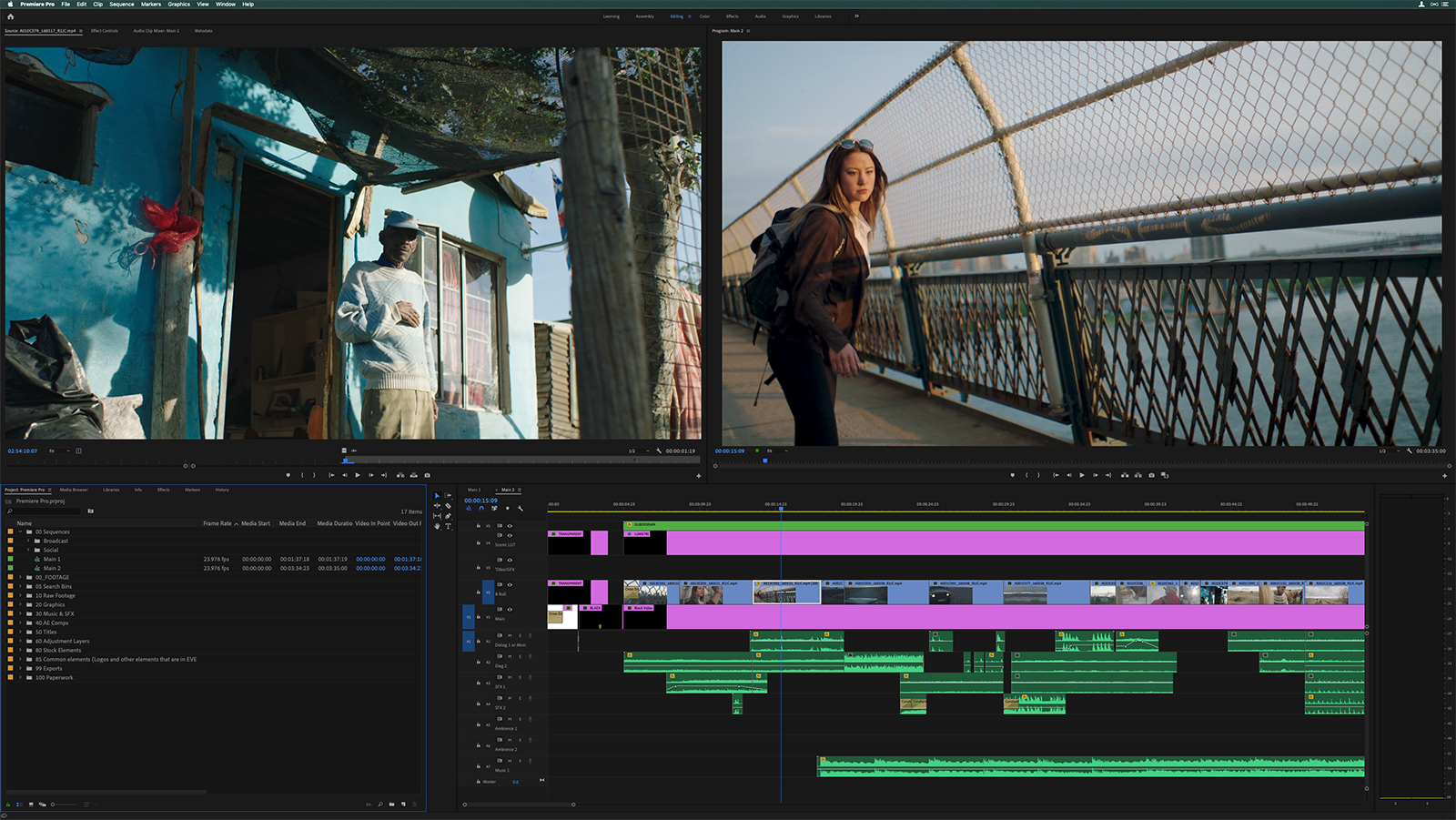
Image Source   Hi everyone! For the project this week, the postproduction process got underway. For this, I began by recording a voiceover o...