Wednesday, November 17, 2021

Technological Evolution


Image Source

The videos presented this week delved into the history of digital media and how it evolved over time. It also looked towards the future, and where things may advance from now. The first video (WatchMedia, 2020) examines the evolution of technology throughout human history, beginning from 100,000 BCE. I found it interesting how it illustrated the acceleration of human invention. Around half of the video shows progress that has taken place over the last century or so.

The second video (CrashCourse, 2018), presented in two parts, presents an overview of media literacy, how it evolved and where it may go in the future. The primary focus of the video is late 19th/ early 20th century print media, as this is when the United States of America started to see newspapers as a widespread medium of communication, uncontrolled by government or religious organisations. Of course, this also left an incentive for others to profit from printing. Two New York businessmen had driven their profit-motivated print media towards sensationalism and exaggeration. Dubbed ‘yellow journalism’, this made people question the validity of certain media, and the effects it could have on society.

In the second part of this video (CrashCourse, 2018), the great shifts in media and its general perception in the 20th century are examined in detail. Following print media, radio broadcasting, television and film had entered the mainstream in this period. This massive upheaval in media consumption resulted in a great deal of ‘protectionism’. This is the concept of attacking media for its messaging and/or content. David Buckingham, a consultant specialising in media declared three distinct types of media protectionism. These are: Cultural defensiveness, political defensiveness, and political defensiveness.

Later, the video introduces Marshall McLuhan, and his efforts in this field. There’s a quote of his mentioned that I found quite interesting; “The personal and social consequences of any medium - that is, any extension of ourselves - result from the new scale that is introduced into our affairs... by any new technology". This signalled a change in how media is examined, a change that lasts until this day. The video concludes with an outlook on the current state of media literacy. "Instead of protecting consumers from media messages, media literacy now seeks to prepare them to receive them and create them". All told, I found this video series quite informative and eye-opening as to how media informs human nature, and vice-versa. It is a complicated thing to discuss, having many intricacies to consider, especially in the digital age.

The third video (World Economic Forum, 2020) looks directly towards the future, and how our global economy will be impacted by an ever-evolving digital environment. With COVID-19, automation, and recession, roughly 85 million people are expected to have their jobs displaced in 5 years. In exchange, 97 million new jobs will be created. This magnifies an ongoing restructuring of our world because of technological advances. The video states that corporations are “investing in reskilling and upskilling their workforce” to meet demand in careers such as DevOps engineering and AI specialists.

I found this week to be an interesting look at where modern technology and mass media originate, and where our future is headed.


References:

WatchMedia (2020) Technology Evolution | 100,000BC - 2020 [online] Available from <https://www.youtube.com/watch?v=IJM3yuIDDPQ> [accessed 17 Nov 2021].

CrashCourse (2018) History of Media Literacy, Part One [online] Available from <https://www.youtube.com/watch?v=oXf0F4GYzWQ> [accessed 17 Nov 2021].

CrashCourse (2018) History of Media Literacy, Part Two [online] Available from <https://www.youtube.com/watch?v=9iUjvNtgWAs> [accessed 17 Nov 2021].

World Economic Forum (2020) What will the future of jobs be like? [online] Available from <https://www.youtube.com/watch?v=eH1fFdjzJAw> [accessed 17 Nov 2021].

Huawei Enterprise Europe (2020) Digital Transformation in 2030 [online] Available from <https://www.youtube.com/watch?v=APhSAIeqLkQ> [accessed 17 Nov 2021].

Sunday, November 7, 2021

Towards Production

Image Source

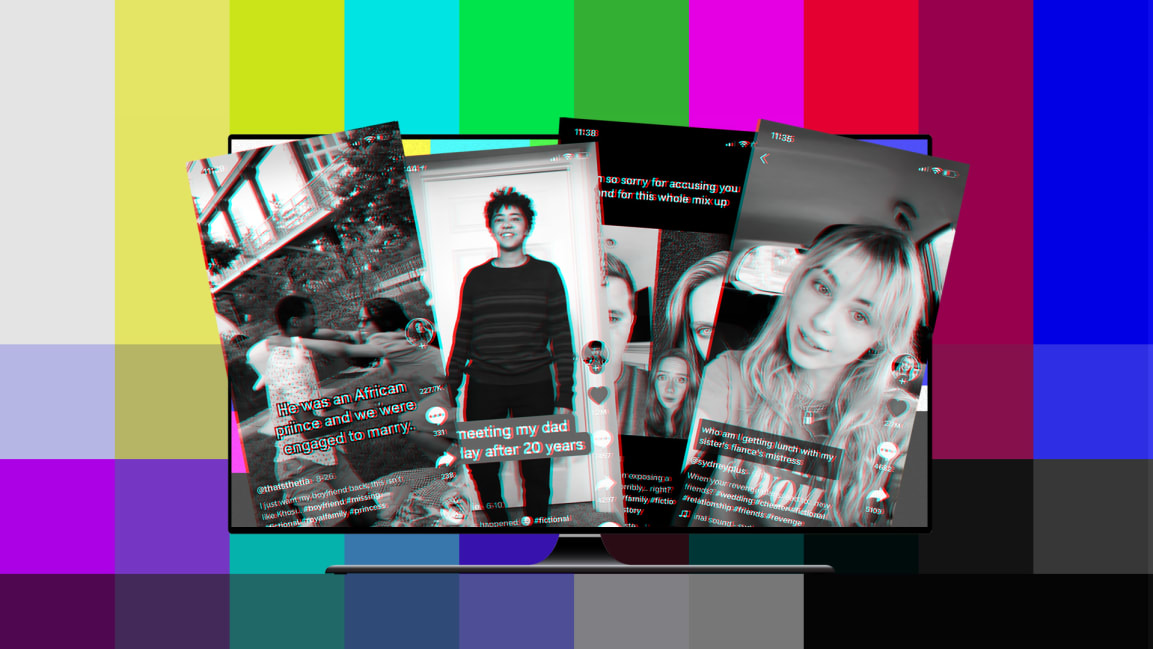
This week, our group became more familiar with our topics and found equal footing. This led to our group settling on the topic of Internet Algorithms and Gatekeeping. I have begun to focus on the topic of ‘fictional influencers’, and how companies can exploit these social platforms for their own gain. Last week, I found an article (Vox, 2021) examining the emerging concept of fictional influencers. This article demonstrates recent examples on TikTok, carried out by Fourfront Media. Their TikTok accounts, posing as average people, are run behind the scenes by writers, actors, and producers.

Fourfront’s most prominent account, @sydneyplus, has over seven hundred and ninety-three thousand followers and several million views across more than seventy videos (SocialBlade, 2021). Sydney, the character, works at a dating app company, and is thrust into personal drama shared with the audience. Fourfront has dozens of characters like this, sharing stories with the audience. As these stories develop, followers are encouraged to interact with these characters online. One of these platforms of interaction is a separate messaging app, used by the audience to “communicate” with their favourite personalities. This app is powered by GPT-3 (Vox, 2021), a Deep Learning tool used to create realistic human responses to messages. They have also experimented with other platforms to facilitate audience interaction, such as Discord, Zoom, and Clubhouse.

Making use of the instant back and forth communication that comes with social media in tandem with fictionalised characters can result in harmful parasocial relationships being formed (Oxford Reference, 2021). This is a recently spreading phenomenon on the internet, made more complex by situations like this, wherein companies exploit social platforms for their own benefit. Of course, this begins to stray somewhat from the original topic at hand, so I may have to look at this topic from another perspective to stay relevant to our chosen topic.

Using the information I found on fictional influencers, I have begun writing an outline for this section of the video, however this may change over time as there may be other avenues to explore with more depth. For example, the user-generated research on YouTube’s Search Engine Optimisation system I wrote about last week in greater detail. In general, I feel that a comfortable level of progress was made this week, and I hope to make good use of Week 7, a review week, for writing more drafts and staying in touch with my project team members.


References:

Vox (2021) What's the deal with fictional influencers? [online] Available from <https://www.vox.com/the-goods/22734620/fictional-influencers-fourfront-fake-tiktokers> [accessed 07 Nov 2021].

Socialblade (2021) @sydneyplus - TikTok [online] Available from <https://www.socialblade.com/tiktok/user/sydneyplus> [accessed 07 Nov 2021].

Oxford Reference (2021) Parasocial Interaction [online] Available from <https://www.oxfordreference.com/view/10.1093/oi/authority.20110803100305809> [accessed 07 Nov 2021].

Fast Company (2021) This company is revolutionizing TV through TikTok [online] Available from <https://www.fastcompany.com/90682632/this-company-is-revolutionizing-tv-through-tiktok> [accessed 07 Nov 2021].

Tuesday, November 2, 2021

Revising writing

This week, I took in the peer feedback and examined my own writing to see how I could improve it. This rewriting task helped me find weak points in my writing that I can improve upon in the future. For example, when first reading over my post ‘Media Literacy’ (Blogger, 2021), I found many of the sentences to be too long and disjointed. This resulted in text that was very difficult to read. I tried to break up some of the longer sentences in a way that conveyed the same message without detracting from the piece. After this, I ended up with a similar word count, message, and a more readable post overall. I also noticed that I used some terms several times over, which made it a little repetitive.

Having made these changes, I looked to external feedback. Being offered an outside perspective helped me to realise what went wrong, and how I could fix it. A 'what if' suggestion given to me in peer feedback was that I should properly close out the text with a summary. Once I put this in, I also recognised that the opening was very abrupt and didn't offer much context. Once this was added, it felt like a complete piece on its own, as opposed to an excerpt. This was also helped by adding proper citation and an image to the article. These suggestions, coupled with self-reflection definitely improved my writing, and I hope to use this in future writing.
 
References:

Blogger (2021) Media Literacy [online] Available from <https://milo-idm.blogspot.com/2021/10/media-literacy.html> [accessed 2 Nov 2021].

Blogger (2021) Rewrite #1 [online] Available from <https://www.youtube.com/watch?v=OSLHcUTA5qA> [accessed 2 Nov 2021].

Rewrite #1

Image Source

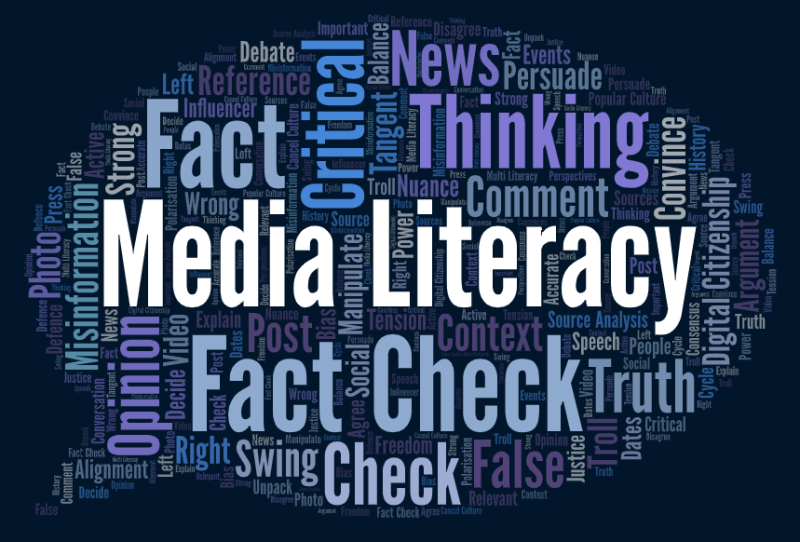
 This selection of articles gave me a greater perspective of the effects of social media on the average person’s perspectives and outlooks. They also showed how effective media literacy can be as a tool against misinformation and disinformation. In the first article (Media Literacy Ireland, 2020) Niamh Kirk examines what media companies are doing to combat misuse of social media services. As shown in the survey conducted by FuJo Media, 62 percent of people have concerns about misinformation online. This shows a clear need for misinformation to be tackled. This could be done by through teaching media literacy, empowering users, or removing it at the source.

Both governments and corporations have a much bigger role in combatting misinformation than I thought. The European Commission’s Code of Practice on Disinformation (ECCPD) was signed by media corporations Facebook, Twitter, Google, and Microsoft. While they want to be accountable, their progress isn't holding up to scrutiny. The Broadcasting Association of Ireland (BAI) conducted a ‘Code Check’ report. This examined how corporations support users and uphold media literacy (pillars D & E of the code). Customers on these platforms are offered methods of reporting content, but it's unclear if any action is taken in response. Another example of this ambiguous behaviour is the collection and use of user’s personal data.

The second article (Media Literacy Ireland, 2020) shows that, without these supports in place, misinformation gets more recognition than it should. Almost half of UK respondents to a survey had come across false information about COVID-19. In addition, more than a third of NI participants said, “they found it hard to know what is true and what is false about Coronavirus”. The conclusion to this article suggests that “There is a role to play for all media literacy practitioners” in following up on misinformation. This is a very important note to make, as faults in communicating can happen at any stage. Any number of issues can lead to errors in communication. It could be that the message is conveyed poorly, or the audience misinterprets it, or it is conveyed in the wrong medium to begin with.

The article, “News media literacy, perceptions of bias, and interpretation of news” (SAGE Publishing, 2020) further solidifies this wariness of widespread media. It finds that “individuals seek out news from sources that match their political beliefs”. I think it’s important to mention that cognitive biases, as shown throughout this article can have an ill effect on audiences. In some cases, this can reinforce bad habits and relations to media. In some cases, people can find themselves in ‘echo chambers’ online; spaces that reinforce harmful doctrines.

 These articles each offered a new perspective of how deception in media can impact our lives. It made me realise that there must be vast change in our media landscape to prevent misinformation. False info has proven to be very harmful in recent years, with dramatic political and social implications. This change also needs to come from many sources; consumers, companies, and institutions each have a role to play in this.


 Sources:

Blogger (2021) Media Literacy [online] Available from <https://milo-idm.blogspot.com/2021/10/media-literacy.html> [accessed 2 Nov 2021].

Monday, November 1, 2021

Media Ethics


Image Source

The videos supplied this week gave me a nuanced look at ethics in media and how its power can be used in both malicious and sincere ways. The first video (McCombs School of Business, 2018) defines ethics as either “the investigation and analysis of moral principles and dilemmas” or “rules and guidelines that establish what conduct is right and wrong”.

The second video (Folding Ideas, 2015) thoroughly examines the work of Marshall McLuhan in his book, ‘Understanding Media’. Most importantly, I found a proper understanding of his quote, “the medium is the message”. This is contextualised through his understanding of media as “any extension of ourselves”. An example demonstrated in the video is how “the electric light reshaped how humans interact with day and night”. As new technologies and mediums develop, the way people interact with the world around them changes drastically.

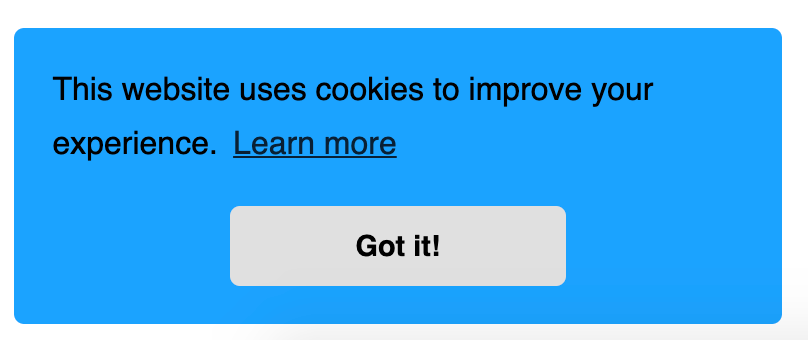
‘How Dark Patterns Trick You Online’ (Nerdwriter1, 2018) examines a phenomenon started by large corporations to sway the actions of consumers. The most common type of dark pattern is a ‘roach motel’; a situation that is easy to get into, but difficult to get out of. Amazon’s hidden account deletion process is a great example of how customers can feel trapped when dealing with an unfamiliar and intentionally confusing system. There are many other types of dark patterns on the web and in apps. One type I have experienced myself is when websites prompt the user for consent to use cookies. Oftentimes, companies will hide or obscure the ‘disable’ option behind another menu, making it harder for users to prevent tracking.

Disabling cookies is hidden behind a 'Learn More' button in this case.
 

‘How One Man Manipulated All of America’ (Freedom in Thought, 2017) discusses Edward Bernays and his pursuits in marketing while consumerism expanded in popularity. His belief was that propaganda was “the mechanism by which ideas are disseminated on a large scale”. He felt no objection to propaganda as a method of promotion, if it had no ill ends or was untruthful. This way of thinking allowed him to expand marketing efforts into many different forms of communication, appealing to consumers’ emotions, thoughts, and desires. This is demonstrated through his most famous campaign, getting women to smoke in the USA in 1929. His use of ‘influencer marketing’ created a local perception of smoking as an act of empowerment for women. By getting suffragettes to smoke during a parade, smoking would become symbolic of their cause and convince more women to smoke. He also appealed to the beauty standards of the time by conveying smoking as a health benefit. With doctors and suffragettes pushing cigarettes to the public, it became much easier to influence customers than through direct advertisement alone.

These perspectives on media ethics have given me a greater outlook on the role of media in our everyday lives. It can be easy to miss out on small details within media that can influence you if you aren’t examining its motives in detail.


Sources:

McCombs School of Business (2018) Ethics Defined [online] Available from <https://youtu.be/4vWXpzlL7Mo> [accessed 1 Nov 2021].

Folding Ideas (2015) Minisode - The Medium is the Message [online] Available from <https://youtu.be/OseOb_wBsi4> [accessed 1 Nov 2021].

Nerdwriter1 (2018) How Dark Patterns Trick You Online [online] Available from <https://youtu.be/kxkrdLI6e6M> [accessed 1 Nov 2021].

Freedom in Thought (2017) How One Man Manipulated All of America [online] Available from <https://youtu.be/nj_UWbifM2U> [accessed 1 Nov 2021].

Post Production

Image Source   Hi everyone! For the project this week, the postproduction process got underway. For this, I began by recording a voiceover o...