Wednesday, December 1, 2021

Media Representation


Image Source
 

Hi everyone! This week, we focused on the topic of representation in media. The first video (StoryBlocks, 2021) depicts individual creators and their perspectives on the importance of representation. The one of the first speakers mentions that it is “important that people feel like they can watch content that they resonate with”. This can be accomplished by representing a diverse range of people in media, so that people can see representations that they can relate with. Another person says that “people who cannot be represented cannot be remembered”. I thought this was an excellent point about how people can feel when they aren’t adequately represented in the media they watch, completely overlooked. Jasmine C. Leyva explains how misrepresentation or a lack of representation in general can be harmful to an entire audience. When this happens, “you’re creating a lie that does damage to viewers that internalise what they see”. While it is beneficial for groups to see themselves represented in a positive light, it also has an effect on the audience and their perceptions of the people around them.

So how should representation be done properly? The second video (The Media Insider, 2019) explains the Stuart Hall representation theory and its role in media. Hall suggests that representation isn’t an “after-the-event activity”, but rather that most events carry no significant meaning until they are represented. An example of this is demonstrated through Donald Trump and other political figures. “How many of you have strong feelings about him either way? The answer is probably yes. How many of you have actually met him?” This shows how media in its many forms can imprint any kind of opinion on their audiences. As this is the case, ideas presented in media can often reflect those that are in power of media organisations. “What we almost always find is wealthy, white, straight men. As such, the representations that we see in the media tend to reflect their ideology”. When representations are limited to stereotyping and enforcing pre-existing harmful ideas, this can reflect on impressionable viewers. As mentioned in the video, “when stereotypes are used again and again over years and then decades the lack of diversity in representations can really narrow society’s perception of these things”.

Finally, the third video (SB Ikastgym, 2015) is a clip from the documentary “Miss Representation”, an examination of how women are portrayed in US media. Focus is placed on the 2008 USA Presidential election, wherein Hillary Clinton and Sarah Palin were disparaged by prominent media figures. One of the speakers in this clip, Caroline Heldman, explains that media is heavily involved in socialising children into believing that leadership is a man’s role. The quote “You can’t be what you can’t see” from Marian Wright Edelman perfectly encapsulates the point being made in this video. That point is that generally, societal change stems from people seeing things in media and reflecting on it. A few minutes into this piece, there is a montage of media personalities (mostly political pundits) making offensive remarks that range from stereotyping to directly insulting. The number of soundbites included in this segment demonstrates that these were not unpopular or controversial opinions to hold, and that these media corporations felt comfortable with pushing these ideas to their audiences.

Overall, these videos gave me a broader view of representation and how it ties into many different aspects of digital media today. Proper representation can combat harmful stereotypes, help people to pursue their aspirations, and prevent the cultivation of discriminatory attitudes within our society. While I think a lot of progress has been made, more work should be done to ensure that people feel secure in how they’re represented in widespread media.


References:

 StoryBlocks (2020) Why Representation Matters [online] Available from <https://www.youtube.com/watch?v=ILmrpdxWgaU> [accessed 1 Dec 2021].

 The Media Insider (2019) Stuart Hall's Representation Theory Explained! Media Studies revision [online] Available from <https://www.youtube.com/watch?v=yJr0gO_-w_Q> [accessed 1 Dec 2021]. 

 SB Ikastgym (2015) Miss Representation Female Leadership [online] Available from <https://www.youtube.com/watch?v=QcxeQFuUqJM> [accessed 1 Dec 2021].

Wednesday, November 24, 2021

Another Revision

 Hello everyone! Last week, blog posts were submitted for a second round of peer feedback. This week, I had the opportunity to reflect on my work and the feedback given to me. Having read through those, I felt well equipped to re-examine and improve on my previous article regarding ‘Media Ethics’.

I found peer feedback to be a great help in refining this blog post, especially when it came to the overall structure of the text. For example, I had multiple suggestions that I introduce the piece in a more personal and inviting manner. I was able to fix this oversight by adding a greeting at the beginning and ending. “Hello everyone! This week I will be discussing…” felt like a more pleasant and gradual introduction to the piece than what I previously started with. In the past, I had some trouble figuring out how to introduce a blog post, but now I feel better prepared for future writing.

A similar situation is found in the closing paragraph, which I now feel is a better summary of my thoughts and discoveries on the topic. I also took into consideration a suggestion to sign off in the closing sentence. Just a simple “thanks for reading” made for a more satisfying ending to the text.

I found this rewriting process to be more productive than originally expected, and I believe that receiving this feedback will improve my writing in the future. Thank you for reading!


References:

Blogger (2021) Rewrite #2 [online] Available from <https://milo-idm.blogspot.com/2021/11/rewrite-2.html > [accessed 24 Nov 2021].

Rewrite #2


Image Source

Hi everyone! This week, I will be discussing the topic of Media Ethics, including its history and how its power may be manipulated for both malicious and sincere gains. The first video (McCombs School of Business, 2018) defines the idea of ethics as either “the investigation and analysis of moral principles and dilemmas” or “rules and guidelines that establish what conduct is right and wrong”.

The second video, titled ‘Minisode – The Medium is the Message’ (Folding Ideas, 2015) thoroughly examines the work of Marshall McLuhan in his book, ‘Understanding Media’. Importantly, I found a more thorough understanding of his quote, “the medium is the message”. This is contextualised through his understanding of media as “any extension of ourselves”. An example as shown in the video is “the electric light reshaped how humans interact with day and night”. As new technologies and mediums develop, the way people interact with the world around them changes drastically.

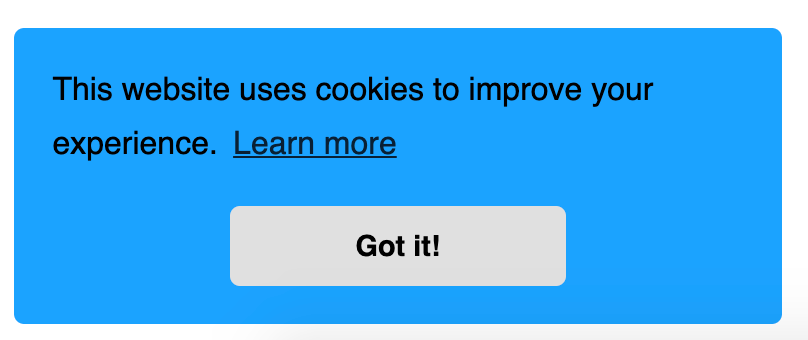
‘How Dark Patterns Trick You Online’ (Nerdwriter1, 2018) reviews a phenomenon perpetuated by corporations to sway the actions of consumers. The most common sort of dark pattern is a ‘roach motel’; a situation that is easy to get into, but difficult to get out of. Amazon’s hidden account deletion process is a great example of this. This can make customers feel trapped when dealing with an unfamiliar and intentionally confusing system. There are many other types of dark patterns that may be found both on the web and mobile apps. One pattern I personally experience occurs when websites prompt the user for consent to use cookies. In many cases, companies will hide or obscure the ‘disable’ option behind another menu, making it harder for users to prevent tracking.

Disabling cookies is hidden behind a 'Learn More' button in this case.
 

‘How One Man Manipulated All of America’ (Freedom in Thought, 2017) discusses Edward Bernays’ pursuits in marketing while consumerism saw a dramatic increase in popularity. His belief was that propaganda was “the mechanism by which ideas are disseminated on a large scale”. He felt no objection to propaganda as a method of promoting a product or service, as long as it had no ill ends or was untruthful. This way of thinking allowed him to expand marketing efforts into many different forms of communication, appealing to consumers’ emotions, thoughts, and desires. This is easily highlighted through his most famous campaign, getting women to smoke in 1920’s USA. His use of ‘influencer marketing’ created a local perception of smoking as an act of empowerment for women. ‘Influencer marketing’ being the use of influential figures in the local area to generate buzz around an idea. By getting suffragettes to smoke during a parade, smoking would become symbolic of their cause and convince more women to smoke. He also appealed to the beauty standards of the time by conveying smoking as a health benefit. With doctors and suffragettes pushing cigarettes to the public, it became much easier to influence customers than through direct advertisement alone.

These videos offered a wide variety of perspective on the idea of media ethics. After analysing them in detail, I can now say that I have a greater understanding of the role media plays in our day-to-day lives. Especially how easy it can be to miss out on details in media that are intended to influence you if you don’t think about it critically. Thank you for reading!


References:

McCombs School of Business (2018) Ethics Defined [online] Available from <https://youtu.be/4vWXpzlL7Mo> [accessed 1 Nov 2021].

Folding Ideas (2015) Minisode - The Medium is the Message [online] Available from <https://youtu.be/OseOb_wBsi4> [accessed 1 Nov 2021].

Nerdwriter1 (2018) How Dark Patterns Trick You Online [online] Available from <https://youtu.be/kxkrdLI6e6M> [accessed 1 Nov 2021].

Freedom in Thought (2017) How One Man Manipulated All of America [online] Available from <https://youtu.be/nj_UWbifM2U> [accessed 1 Nov 2021].

Post Production

Image Source   Hi everyone! For the project this week, the postproduction process got underway. For this, I began by recording a voiceover o...